
Storage, Buffer Management, and SCU Containers
The salvage logistics process relies on converting the RMC and construction materials into SCU containers using the onboard processing unit. Storage data is monitored via the HUD or MFDs to prevent the internal buffer from becoming full; once the buffer is full, production stops until the containers are ejected. While ships like the RSI Salvation automate containerization for a single pilot, heavy vessels like the Aegis Reclaimer require manual handling by the crew. Finally, it is recommended to fill the internal buffer after completing the cargo hold to optimize the total volume of material transported per trip.
Module content
All materials recovered during hull stripping or structural salvage operations must be packaged before they can be transported, refined, or sold. These logistics rely on the standardized SCU (Standard Cargo Unit) container format.
Creation and Packaging of SCU Containers
The harvested materials (RMC or construction materials) are transported directly to your ship's onboard processing system.
- Compaction: The system converts raw materials into SCU containers as they are harvested.
- Destination: These containers are generated either directly on the ship's cargo grid or as spare cartridges intended for storage.
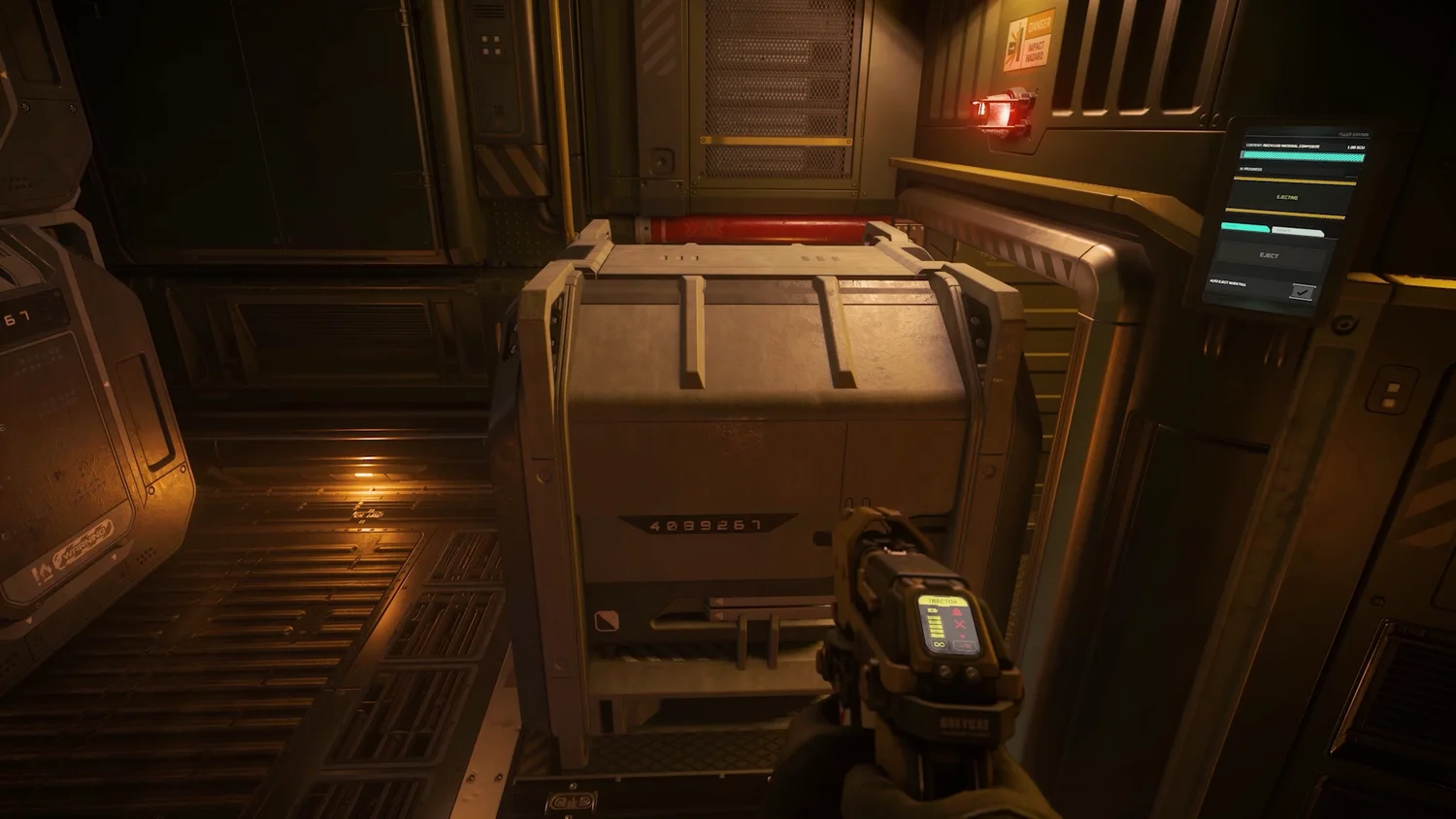
Buffer Management and HUD/MFD Monitoring
Before the material becomes a physical box in the cargo hold, it passes through an internal reservoir called the filler station buffer.
- Capacity Display: The remaining capacity of the buffer and cargo grid is visible at all times on the ship's head-up display (HUD) or multifunction displays (MFDs).
- Saturation threshold: When the buffer or cargo grid reaches 100% of its capacity, the system automatically locks.
- Ejection Rule: To prevent a complete halt to harvesting, the operator must eject the SCU boxes from the buffer or distribute the load across the storage grid before resuming operations.
Logistics by Ship Type
Container handling varies considerably depending on the equipment used and the size of the crew
- Single-seat ships (e.g., RSI Salvation): Feature a fully automated onboard system that smoothly compacts and stacks SCU containers to simplify the work of solo pilots.
- Large ships (e.g., Aegis Reclaimer): Require a more manual and coordinated process. Crew members must move SCU containers from the generation area to the main storage area using tractor beams (such as the MaxLift).
The "Final Stamp" Trick (Buffer Bonus)
Experienced professionals take advantage of the buffer's capacity to maximize the yield of each run. Once the vessel’s hold is completely filled with SCU containers, it is recommended to continue stripping or disintegrating until the internal buffer is fully filled before leaving the debris site. This allows for the removal of an additional volume of material without exceeding the physical limits of the hold.
Validation exam
Exam locked
Complete the previous module to unlock this exam.